
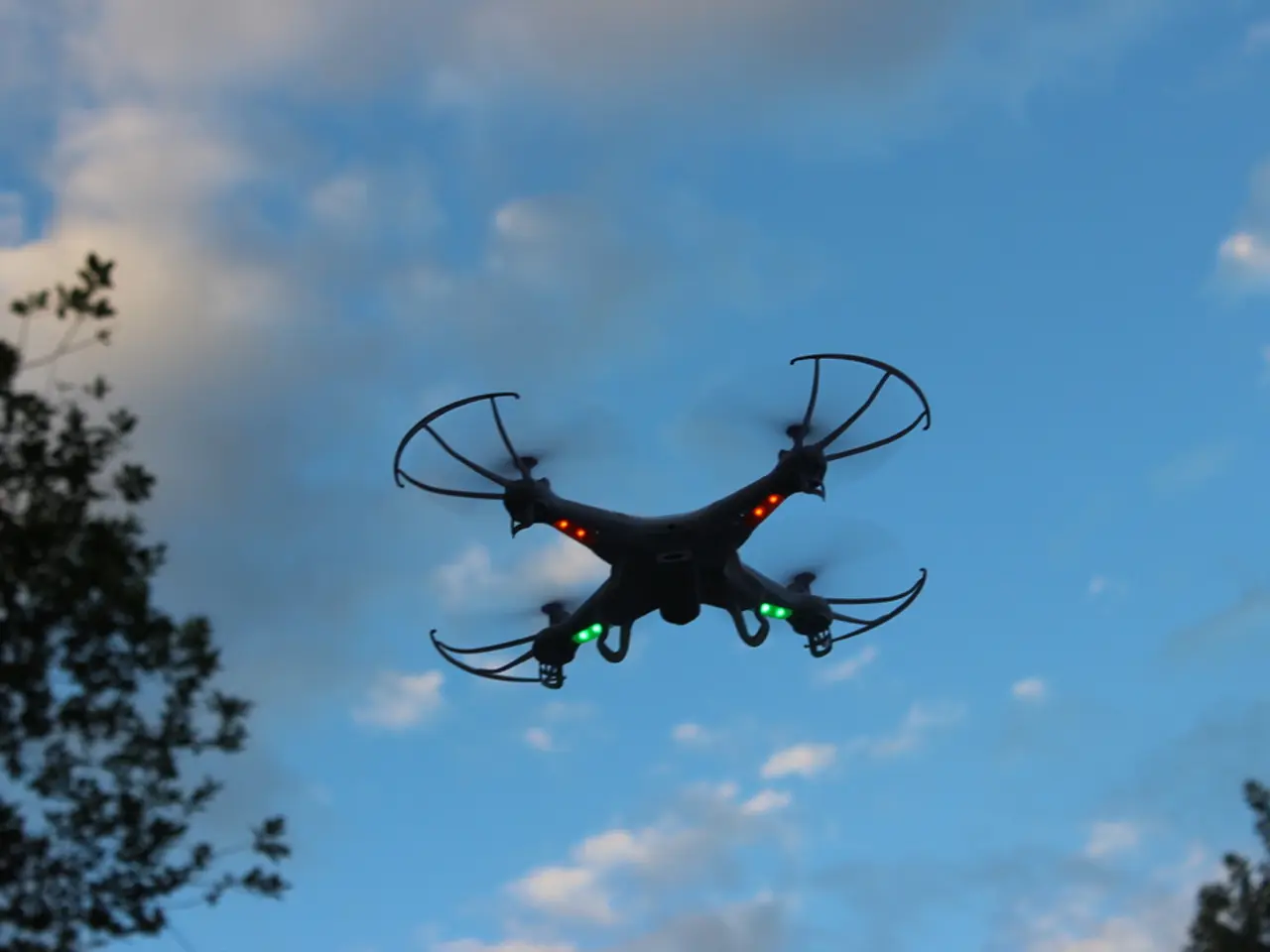
Co-founder of Global Air Drone Academy (GADA) is identified as Eno Umoh.
In the realm of STEM education, one name stands out for his innovative approach and global impact: Eno Umoh. The media and creative production veteran has transformed into a leading figure in drone and STEM education, all thanks to his initial fascination with drones as a creative tool for aerial footage [1].
Umoh's journey took an educational turn when he recognised the potential of drones to engage students in STEM learning. In 2015, he co-founded Global Air Media, a drone services company, and subsequently, the Global Air Drone Academy (GADA) as a nonprofit focused on youth education through drone technology and innovation [1].
The mission of GADA is clear: to provide equitable access to drone technology and STEM education worldwide. Through hands-on drone training, education in aerodynamics, coding, GIS (Geographic Information Systems), data analysis, and entrepreneurship, GADA empowers students, not just by developing their technical skills, but by building their confidence to innovate and pursue careers in technology-related fields [1].
GADA offers a variety of programs that cater to students across different levels and backgrounds. These include drone technology camps for middle and high school students, FAA Part 107 prep courses, startup and innovation challenges, custom programs for underserved schools and global NGOs, and mentorship networks [1].
Umoh's international programs address real-world challenges such as agricultural surveying, disaster mapping, and infrastructure monitoring, through partnerships with various organisations [1]. His efforts have extended to countries like Nigeria, Ghana, Kenya, the UAE, Ethiopia, and Rwanda, where he has led educational exchanges and drone bootcamps [1].
Umoh is also an outspoken advocate for diversity, equity, and inclusion in the drone industry. He ensures that GADA programs serve underrepresented groups such as first-generation learners, young women in STEM, and aspiring entrepreneurs in under-resourced regions [1].
Looking ahead, Umoh envisions GADA as a hub for open-source mapping tools, drone startup incubation, hardware training and repair certification, online communities for peer learning and technical support, helping create a new generation of drone entrepreneurs [1]. He aims to embed drone education into school systems worldwide, with localized curricula and teacher support systems [1].
Umoh is also developing hybrid learning platforms for remote instruction and live field exercises to reach rural communities and urban schools alike [1]. Through partnerships with the U.S. State Department, USAID, and various embassies, Umoh's international programs continue to make a significant impact in addressing real-world challenges.
In essence, Eno Umoh's journey from media and creative production to leading a global drone education movement is a testament to the transformative power of technology in education. His vision for GADA is to democratise technology and inspire youth globally through drone-based STEM programs, redefining what access to drone technology means: a means for freedom, education, and opportunity.
[1] Source: Global Air Drone Academy website and various news articles.
Through Umoh's vision for the Global Air Drone Academy (GADA), technology and education merge to offer a unique lifestyle of innovation and self-development for students worldwide. By providing access to drone technology and STEM education, GADA empowers individuals to pursue careers in technology-related fields, bridging the gap between tradition and future advancements.



%20is%20identified%20as%20Eno%20Umoh.)