
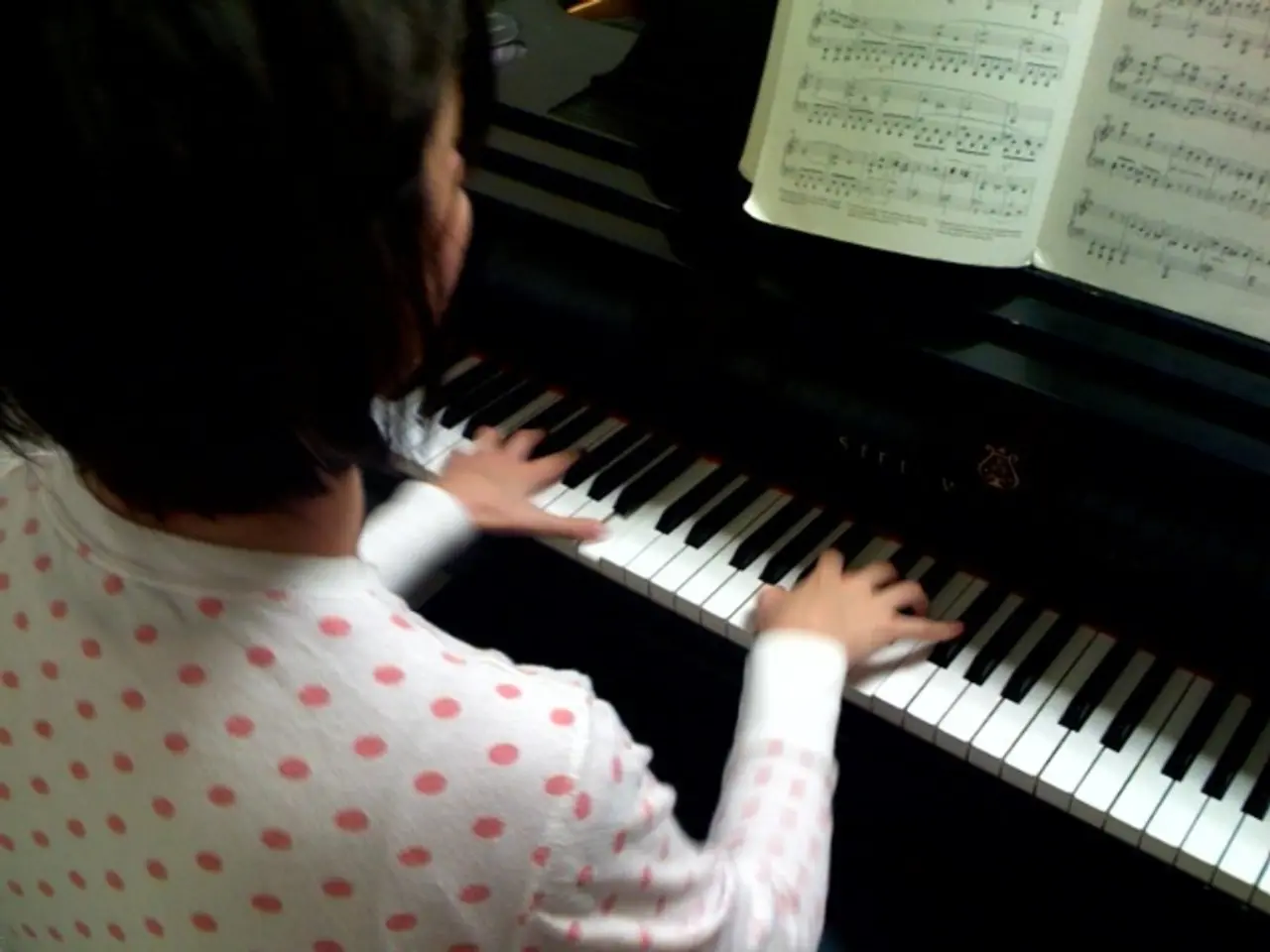
Detailed Walkthrough of ABRSM Piano Examinations
ABRSM Piano Exams: A Recognised Pathway for Musical Growth
The Associated Board of the Royal Schools of Music (ABRSM) offers a comprehensive range of graded exams and diplomas in various musical disciplines, including piano, violin, singing, theory, and more. Established in 1889, ABRSM is a renowned examination board in the UK.
ABRSM exams are renowned for their high standards and rigorous evaluation of musicianship and technical proficiency. They emphasise musicality, creativity, technique, and fundamentals, helping candidates develop essential skills such as finger dexterity, hand independence, breathing control in performance, and careful attention to dynamic markings.
The exams are structured and progressive, providing a clear and reliable benchmark of piano skill and progress. For practical exams, scales and arpeggios, sight-reading, and aural tests are required. Preparing for an ABRSM piano exam is an excellent opportunity for personal and musical growth.
ABRSM offers eight different grades and several diplomas in various disciplines. To make the most of your learning experience, practice consistently, embrace challenges, and remember that the exam is just one aspect of your musical adventure.
Performance exams require students to submit a video recording of their performance, which is then assessed remotely by an examiner. On the other hand, practical exams are traditional face-to-face examinations, assessing a student's ability to perform pieces, play scales and arpeggios, sight-read music, and demonstrate aural skills. Theory exams are conducted in a written format and can be taken in person or online, depending on the grade level.
ABRSM music theory courses are available for students who need help preparing for the theory exams. If you plan to pursue Grade 6 in Piano through ABRSM, you will need to fulfil a prerequisite: sitting the Grade 5 theory exam.
The benefits of taking the ABRSM piano exam include its status as a globally recognized exam board with high standards. ABRSM exams offer a structured and progressive syllabus that motivates learners by setting clear goals and guiding future learning. They provide a varied repertoire with pieces from diverse composers, allowing tailored preparation suited to individual abilities and interests.
ABRSM exams serve as a respected credential used by teachers, students, and parents as a measure of achievement and progress, widely acknowledged in music education internationally. While some learners find exams highly motivating, others may feel pressured; however, overall ABRSM remains one of the most respected pathways for formal piano assessment worldwide due to its consistent grading, musical focus, and global recognition.
Reviewing the feedback provided by the examiner and using it to guide future practice and learning is essential after the exam. ABRSM exams are respected and accepted globally and hold significant value in the music industry.
WKMT, a piano instruction centre in London, has been providing piano instruction to students since 2010 with an exceptional record of success. Their students have consistently achieved outstanding results in their exams, demonstrating their commitment to students' musical growth and achievement. WKMT's approach to learning music is comprehensive and well-rounded, encompassing various aspects of musical development, such as technical proficiency, theoretical knowledge, creative expression, and musical interpretation.
In conclusion, ABRSM piano exams provide a structured and internationally recognized framework to develop and showcase our musical abilities. With the support of a qualified teacher and consistent practice, you should be able to successfully navigate the ABRSM piano exam process and enjoy a rewarding and enriching musical journey.
[1] ABRSM. (2021). Syllabus. Retrieved from https://www.abrsm.org/en/exams/music-theory/syllabus/
[2] ABRSM. (2021). Graded Exams. Retrieved from https://www.abrsm.org/en/exams/graded-exams/
[3] ABRSM. (2021). Performance Grades. Retrieved from https://www.abrsm.org/en/exams/performance-grades/
[4] ABRSM. (2021). Music Theory Exams. Retrieved from https://www.abrsm.org/en/exams/music-theory/
[5] ABRSM. (2021). About ABRSM. Retrieved from https://www.abrsm.org/en/about-us/
- The ABRSM music theory courses can help students prepare for theory exams, such as the one required to pursue Grade 6 in Piano.
- ABRSM piano exams offer a structured syllabus, emphasizing music theory, advanced techniques, and creative expression, promoting musical growth and achievement.
- With ABRSM exams, learners can explore a varied repertoire from diverse composers, guiding future learning and fostering individual musical development.
- A successful performance in ABRSM piano exams can serve as a globally recognized and respected credential, showcasing musical skills and proficiency in the music industry.